How the FIFA Master is making women’s sport not just about events and numbers

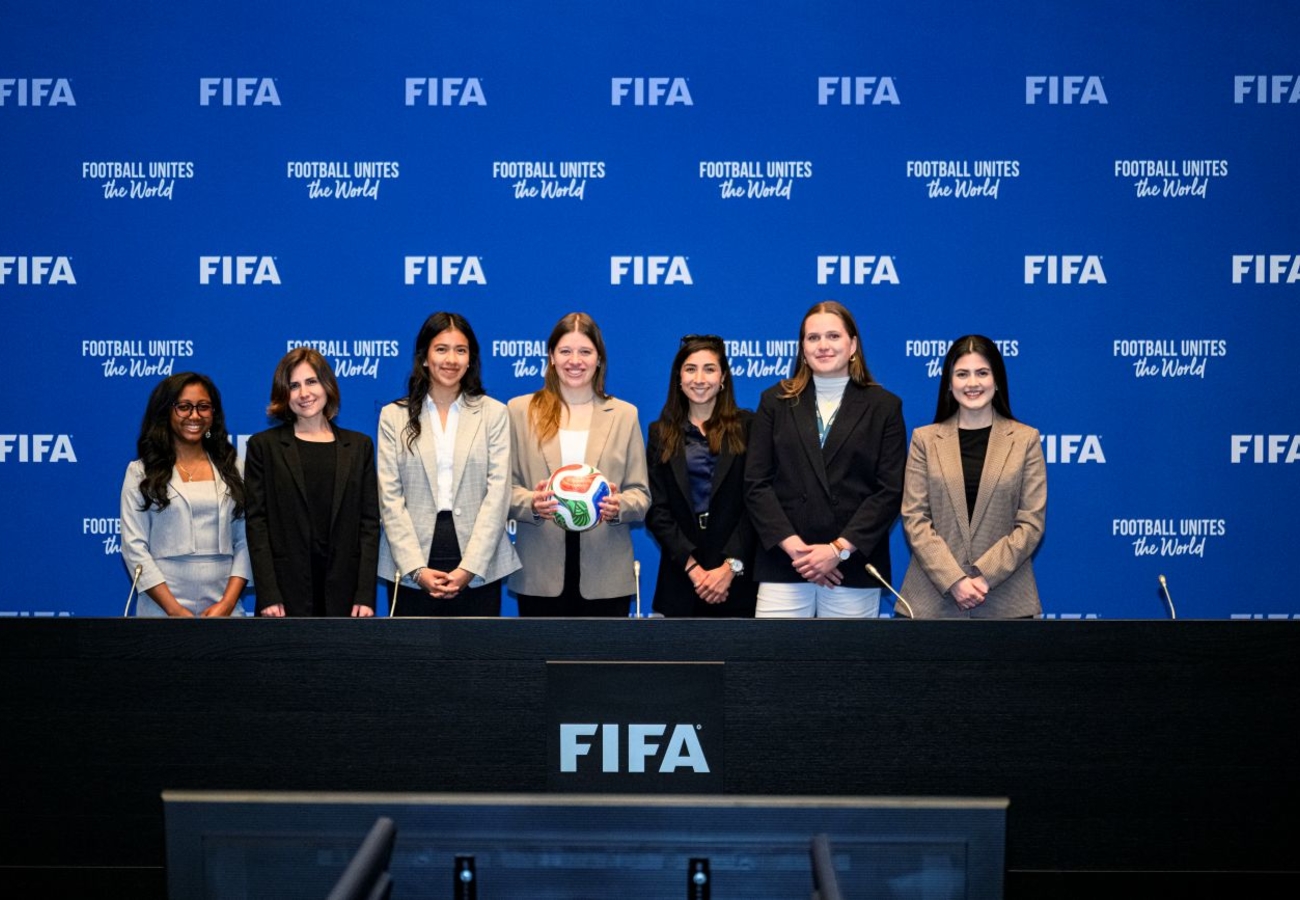
Between 24 June – 25 July next summer, the world’s sporting attention will turn to Brazil and the 2027 FIFA Women’s World Cup. Here, thirty-two teams, from six different confederations, will play matches in eight different host cities, spanning from Fortaleza in the north of the country, all the way down to Porto Alegre in the South, with stops in Rio de Janeiro, Recife, Salvador, Brasilia, Belo Horizonte and Sao Paulo along the way. Stadium capacities will range from 73,139 in Rio to 45,440 in Recife and all were used previously at the 2014 FIFA Men’s World Cup, demonstrating clearly the global growth of the women’s game and the high demand for tickets. Indeed, the last FIFA Women’s World Cup - hosted jointly by Australia and New Zealand in 2023 - sold over 1.8 million tickets and generated more than £420 million in revenues, despite large increases in prize funds, making it the world’s biggest-ever women’s sporting event.
For 2026, Deloitte predicts that global revenues for elite women’s sport will reach at least £2.2 billion for the first time, representing a 25% increase on the £1.76 billion forecast in 2025. This incredible growth can be contrasted to only four years ago when Deloitte’s revenue forecast for women’s sport in 2022 was just £554.4m.
Away from the financial numbers, this summer female athletes have dominated the sports media landscape. The four gold medals achieved by Great Britain’s Amy Hunt at the European Athletics Championships in July, Arsenal winning the Women's Champions League, Marta Kostyuk’s first Grand Slam win at the French Open and Australia winning their seventh women’s T20 Cricket World Cup title at Lord’s are just a few recent examples from a golden year of women’s sporting success already in 2026. This is also an era of sporting greats, with Australia’s Ellyse Perry becoming the first cricketer - of any gender - to win nine World Cups across any format, and the return of icon Serena Williams to competitive tennis this summer at both Queen’s Club in London and at Wimbledon. To be able to watch these athletes compete is a true privilege. Next summer’s FIFA Women’s World Cup will create many more, not only as stars on the pitch but also in wider cultural life, with Spain’s Aitana Bonmatí, Colombia’s Linda Lizeth Caicedo Alegría, England’s Leah Williamson and USA forward Trinity Rodman to name just a few examples. Bonmati and Williamson alone have a combined 3.7 million Instagram followers.
This continually expanding rise in the power and profile of women’s sport – and it is worth noting here that the 2028 Los Angeles Olympic Games will be the first games to feature more female athletes than male - is one of the reasons the FIFA Master International MA in Management, Law and Humanities of Sport is so proud of our graduates - both female and male, as they contribute to this growth and success. Indeed, since the first edition of the FIFA Master was launched, over 230 female students from around the world have graduated from our programme and are now working in the global sports industry.

We are also proud to be able to name Tokyo 2020 Olympic Rowing Gold Medallist Emma Twigg (15th edition) as part of our alumni community. Emma, who is from New Zealand, is also the first ever student to return as a class Patron and to award degree certificates to the graduating class. She is joined by UEFA Women’s Champions League Winner, Ami Otaki (17th edition), as well as numerous other elite level female athletes and senior sport business managers among our FIFA Master alumni community.
For example, Ratu Tisha Destria who graduated in 2014 and is now Vice President of PSSI (Football Association of Indonesia), 2006 graduate Hannah Burns, who is now the International Olympic Committee’s (IOC) Head of Promotion for Olympic Games Candidatures, FIFPRO Asia/Oceania General Secretary, Shoko Tsuji who graduated in 2017, Supervisor of the Brazilian Women’s National Team at the Brazilian Football Confederation (CBF) Sthefânia Vieira de Lacerda who graduated in 2015, Aine Power who is Executive Director Sport and Games at the Federation Equestre Internationale (FEI) who graduated in 2011 and Primrose Mhunduru who graduated in 2016 and is now Gender Equality and Inclusion Manager at the IOC are just some examples from our female alumni community. Another is Senior Legal Counsel for the New Zealand Rugby Players Association, Rebecca Giordano who also graduated in 2015. As Rebecca explains, “The FIFA Master opened doors for me that would have very likely stayed firmly closed. The exposure to invaluable connections and insights in the world of sport was, without a doubt, the aspect of the FIFA Masters that helped me to best set up my career”.
International Women’s Day
Each year the FIFA Master marks International Women’s Day with a marketing campaign focussed on the achievements and successes of our alumni now working in women’s sport. It should be noted, however, that the themes of gender equality, women’s sport history, women in sport and female leadership are addressed during the full academic year of the FIFA Master and within all modules of the course delivered at De Montfort University (United Kingdon), SDA Bocconi (Italy) and Neuchâtel (Switzerland). As 2022 graduate Aisha Nazia from India explains, “What stood out to me was how naturally conversations around women’s sport were embedded into the learning experience. It wasn’t treated as a niche or a side discussion; it was part of the core narrative. Whether through academic discussions, guest lectures, or informal conversations with peers from across the world, there was a consistent recognition that women’s sport is not just growing, it is redefining the industry itself”.
The multi-disciplinary approach of the course with modules in Management, Law and Humanities of Sport was another key reason why Aisha applied. “Sport isn’t just about events or numbers. It’s about people - athletes, fans, workers, volunteers. It’s about history - understanding how sport became what it is today. It’s about strategy - building brands, running operations, managing stakeholders. And it’s about systems - laws, rights, regulations, governance. To be a true leader in the sporting ecosystem, you must understand where sport comes from, who it’s for, how it's managed, and what protects it”, added Aisha.
Recent course events which have been open to the public have also focussed on the themes of ‘Female Leadership’ such as a conference held at De Montfort University in Leicester with various female alumni speakers and during the 2026 Milano Cortina Winter Olympic Games with special talks held at SDA Bocconi. High profile female industry speakers are also invited into the classroom throughout the FIFA Master academic year as role models for the students to meet and to provide insights into their own careers within the industry.
The course Scientific Committee, which is comprised of academics from the three partner universities and International Centre for Sports Studies (CIES), also has two female Co-Scientific Directors - Prof. Madalina Diaconu (University of Neuchâtel) and Dr Heather Dichter (De Montfort University).

This strength of diversity, not only from the students accepted onto the programme, but also from the course content, is one of the reasons why we have been able to build such a strong reputation, both academically but also within the sports industry itself. To be named as the No.1 Postgraduate Sport Management course in Europe for the fourteenth time in the new 2026 SportBusiness rankings is an incredible achievement and is built on these foundations of equality and inclusion.
2003 graduate and now entrepreneur, Jo Robertson, is another example of this strength of working together. As she explains, “When I studied the FIFA Master over twenty years ago, I expected to learn about the business of sport. What I didn't expect was to become part of a global family. The alumni network has celebrated promotions, shared ideas, launched businesses and supported one another across continents”. Jo is from the United Kingdom and is in the process of launching a new business on Youth Sport. “That same network has become one of the reasons I've kept going”, she explained.
It is clear, therefore, that the power of staying connected and supporting each other, even long after graduation, has never been more important. The power of “people” and the ability to relate, show empathy, and demonstrate emotional intelligence, are still vital in this increasingly AI and digitally driven world. These “people” skills are central to what we do on the FIFA Master and in supporting our graduates to break down barriers and achieve even greater success. The course aim is to equip our graduates with the necessary skills and knowledge to make change a reality now rather than a dream for the future.
As 2024 graduate and now Medical & Performance Assistant at European Football Clubs (EFC), Chiara Delsaut, notes, “for any women considering the programme, my advice would be to just go for it. Women remain underrepresented within sports organisations and leadership, and the FIFA Master is a real opportunity to change that”.

With this message in mind, we are particularly proud that the new 27th edition (2026/27) FIFA Master class will be represented by fourteen women and fourteen men.
This article was written by FIFA Master Humanities of Sport Module Coordinator, James Panter.